

For instance, unexpected additional wind generation in the morning can be stored and reinjected later in the day when solar output is lower than forecasted. This time-shifting capability reduces balancing costs and avoids more expensive corrective measures.
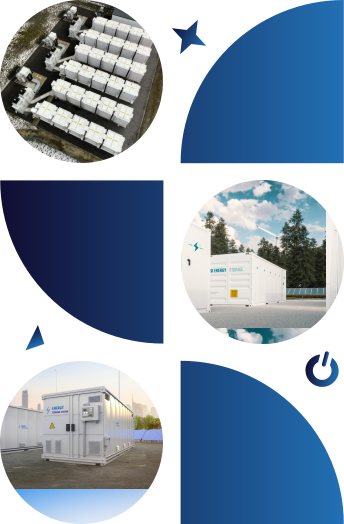
Front-of-meter battery storage
Large scale battery parks connected to the high voltage grid, designed to enhance system flexibility and support large scale renewable integration.
As renewable penetration increases, fast and reliable flexibility solutions become essential to ensure system stability.

An increasingly volatile power system
The energy transition is fundamentally reshaping the electricity system.
Renewable generation is variable and inherently uncertain. Deviations between forecasted and actual production must be managed in real time to maintain system balance and frequency stability.
Today, this balancing function still largely relies on thermal power plants operating as spinning reserves. As renewable penetration increases, this model becomes increasingly costly and misaligned with net-zero ambitions.
How battery parks support grid stability
Grid-scale battery storage provides a sustainable and efficient alternative by enabling:
- Temporary storage of excess renewable generation for later reinjection
- Reduced reliance on thermal reserve capacity
- Rapid compensation of production and demand deviations
- Lower curtailment of renewable generation and reduced industrial load shedding
Our approach is based on long-term partnerships, transparency and performance.
Making battery projects viable and bankable
While the system value of battery storage is clear, structuring financially robust projects remains complex. Revenue streams are stacked across multiple markets and inherently volatile.
Through projects such as ESTOR-LUX (10 MW / 20 MWh in Bastogne), BSTOR demonstrates its ability to:
- Structure and contract project revenues
- Optimise asset utilisation over its entire lifetime
- Generate stable and forecastable cash flows
- Attract fully non-recourse debt financing
Our integrated approach transforms technically complex assets into financially sound infrastructure projects.
Managing forecast deviations in practice
Battery storage proves particularly valuable during forecast error events.
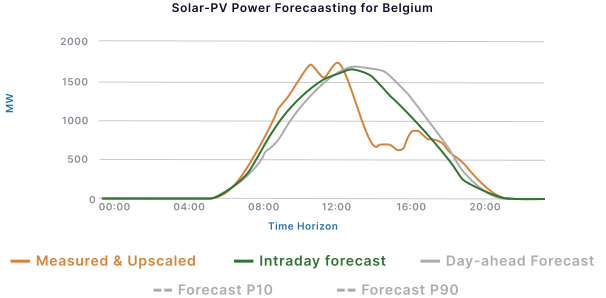
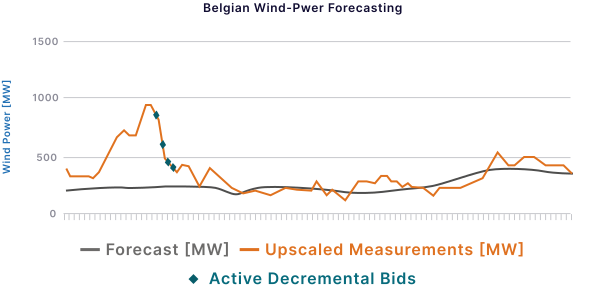
Example of typical forecast error events that can be compensated by a battery park. The unexpected additional wind generation in the morning (of the first graph) can be stored and injected in the afternoon when the solar output is lower than in the day-ahead (and even the last intraday) forecast.
Develop your next grid-scale battery project with BSTOR
BSTOR partners with investors, grid stakeholders and landowners to deploy large scale battery storage projects across Belgium.
Let’s accelerate the transition to a flexible and resilient electricity system together.